

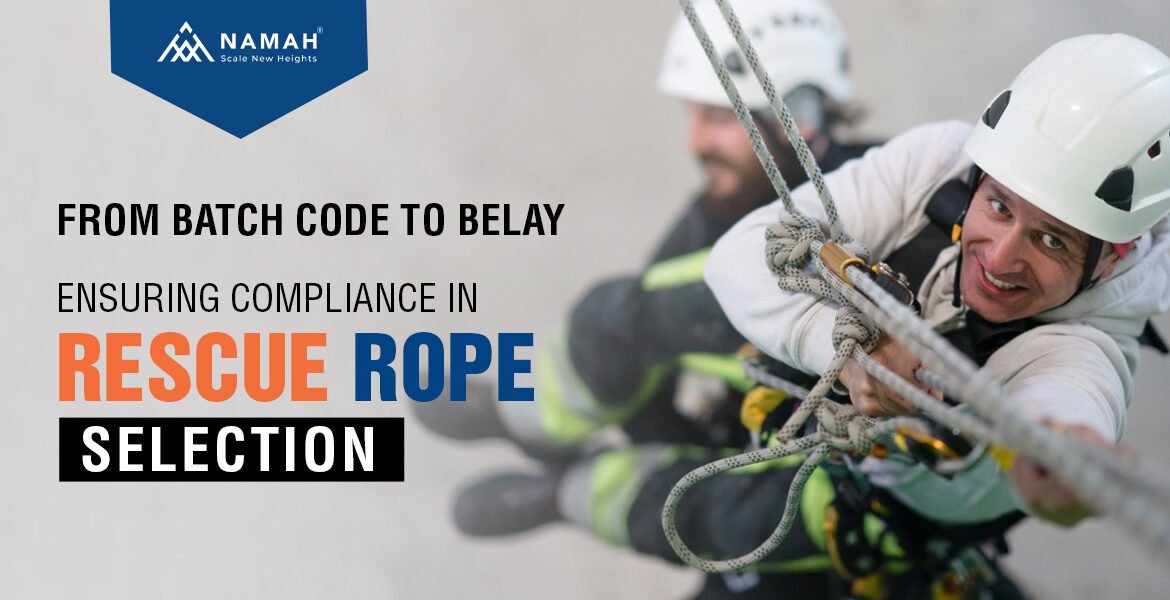
When a call comes in at 01:53, unstable slope, rain turning to sleet, there’s no room for uncertainty. Teams need to know exactly what’s in their hands: the rope’s origin, its intended use, and whether it’s approved for life-safety deployment.
At Namah, rescue and access ropes are built with batch traceability and compliance to recognized standards at the core. Beyond strength and elongation, every rope is backed by clear identification and documentation so the rope on the edge and the record in your logbook say the same thing. Because in real operations, certainty is part of safety.
Why traceability is operational, not administrative
Traceability is the difference between a rope and this rope. When a coil carries a durable batch code, length, model, and manufacture date, and those markings survive months of wet calls and truck life, you can tie it back to intake records, certificates, inspections, and retirement decisions in seconds. That speed matters when incident command wants a ready line now, or when a safety officer asks, “Which batch was on the bridge job last month?”
We build our Semi-Static Ropes with durable identification so each coil maps to a specific manufacturing run and test report. In practice, that means: the rope you staged tonight is the same rope that passed the tests on the certificate in your PPE register, no guesswork, no “we think.”
Traceability also shortens bad days. If a recall ever occurs in the industry, you can isolate affected coils and prove what remains in service is clean. If an investigation follows an incident, your batch-to-document chain becomes the backbone of a defensible account: when it was made, when you put it in service, how you inspected it, and why you retired it.
Compliance turns specs into shared language
Standards don’t make rescues easier; they make them safer and defensible. UIAA/EN categories define how a rope behaves under load (dynamic vs. low-stretch), allowable elongation, and labeling. CE marking, where applicable, backed by ISO-driven quality systems, tells you the factory process is controlled, not improvised. When your SAR SOP says “low-stretch main and belay,” you want ropes that match that standard on the tag and in the device.
On a wet, cold edge, compliance translates to fewer unknowns: the semi-static line you chose will give you steady lowers and predictable raises; your device compatibility stays inside manufacturer specs; your belay tracks without chatter. After the call, the same compliance keeps your paperwork clean: model, category, certificate number, batch code, all aligned. If you need fall-absorbing lines for specialized tasks, your selections live in Dynamic Ropes, clearly separated from low-stretch SAR mains in your register. Keeping the ecosystem coherent with Harnesses helps training transfer across teams and reduces errors when it’s loud and late.
How this looks on a real call
You stage a main and belay. Edge protection is down. Descender feels calm; progress capture is set. Before you commit, a quick glance at the tail: batch code is legible; it matches the entry in your log. Intake date puts the rope inside policy for service life; the last inspection was logged after Tuesday’s training. The sheath feels round no flat spots, no hard, glazed sections from heat. You clip in with the confidence that the line is exactly what it claims to be, and that your documentation will hold up to scrutiny if a question arises later.
That same rhythm continues when you get back: rinse, air-dry (no heaters), log time-in-service, and record any unusual load or chemical exposure. If the rope meets a sharp edge or a hot lower, it goes to the rack for a lead tech to decide. Where the decision is close, traceability lets you retire without debate and show why in one line of text.
The habit that pays for itself
Build your SAR register around three simple truths:
- Pick the right category on purpose. Semi-static ropes for main/belay precision; dynamic only where fall absorption is the job. Keep diameters inside device specs that your crews actually use with gloves on.
- Make the batch code the key. Scan or record it at intake, tie it to certificates, and use it in every inspection or retirement entry. If the marking isn’t durable enough to survive field life, it isn’t helping you.
- Write retirement rules you can apply at 03:10. Visible core, sheath slippage, flattened sections, chemical contamination, unknown exposure: pull from life-safety duty immediately. No nostalgia, no exceptions.
We design Namah ropes with markings and packaging so that those habits are easy. You shouldn’t need three binders and a magnifier to run a trace.
From our bench to your bay
In our workshop, we do two kinds of work: numbers and feelings. We cycle ropes wet and dry, measure elongation in the working range, check sheath abrasion over edge hardware, and heat-set for roundness so lowers stay smooth. Then we pull the same ropes through common SAR devices with the gloves you actually wear. Only when the documents and the behavior agree do we ship along with certificates and batch data, your registrar can load into the PPE system without a chase.
If you’re tuning your cache now, start with low-stretch mains in Semi-Static Ropes sized to your descenders and backups, keep a clear lane for Dynamic Ropes where shock management is required, and standardize on Harnesses that keep attachment and friction familiar across crews. Send us your device list and typical edges (steel, concrete, rock); we’ll point you to diameters and sheath builds that feel calm on your terrain, and provide the batch and certificate package your auditor will want.
A rescue rope is in your hands. Batch traceability and compliance are the confidence to use it on the call and after it, when the questions are formal, and the stakes are reputational. Get both right, and your nights get quieter for all the right reasons.