
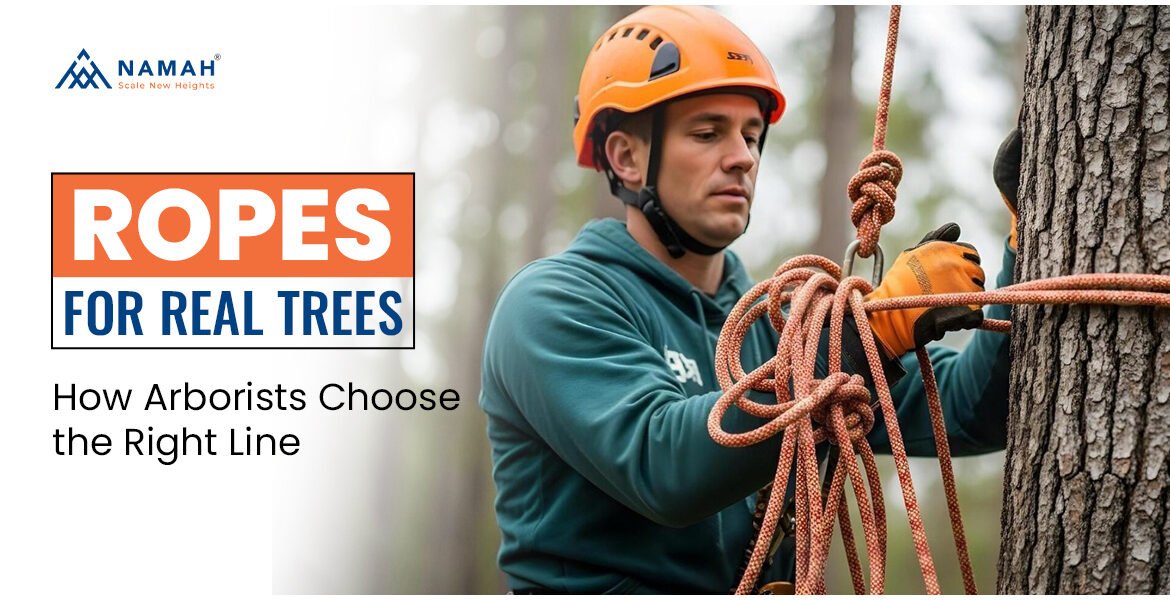
Tree work teaches patience in ways few jobs do. Sap sticks to gloves, bark nicks skin, and every movement carries weight that isn’t always vertical. In that environment, arborist rope selection isn’t just a purchasing decision, it’s a trust decision. The rope you choose shapes how smoothly you climb, how confidently you rig, and how safely you come home at the end of the day.
For working arborists, ropes are more than passive tools. They move through hands, hitches, and branches all day long. Good tree climbing ropes behave predictably even when dirty, sticky, or loaded at odd angles. At Namah, we design arborist lines to work with friction, not fight it and build them around fibres and constructions that support real work in real trees.
Why Arborist Ropes Are Different
Climbing hardware borrowed from rock or industrial systems often fails to address the realities of arboreal environments. Trees are messy. Sap, dust, moisture, and bark interact with rope fibres in ways rock and steel never do. That’s why arborist rope selection can’t simply copy climbing logic.
Tree systems are dynamic and lateral. Ropes bend sharply around limbs, endure short-load cycles, and rely heavily on friction-based systems. The best tree climbing ropes hold their form, resist glazing, and behave consistently in dirty conditions even when friction increases unexpectedly. Namah rope engineering applies decades of textile expertise to balance controlled friction with durability.
Friction: Friend, Not Enemy
In arboriculture, friction is not something to eliminate it’s something to master.
Hitches, descents, and work positioning all depend on controlled friction. A slick rope makes hitch tending unpredictable, while an overly rough rope accelerates wear. That’s where friction management in arborist ropes becomes essential.
Namah uses meticulously engineered braids and high-quality nylon multifilament fibre that balance surface grip without harsh abrasion. The result isn’t just friction it’s honest interaction between rope and knot. Climbers who feel that honesty move with confidence rather than caution.
Sap Resistance and Daily Abuse
Few environments are harder on rope surfaces than trees. Sap builds up quickly, attracts dirt, and grinds into fibres. Over time, this affects handling, knot behavior, and safety. That’s why sap resistance in climbing ropes matters more in arborist work than almost anywhere else.
A well-designed sheath starts with a tight weave and abrasion-resistant fibres. Namah’s ropes are engineered to resist deep sap penetration, maintain consistent feel, and tolerate frequent washing without losing handling performance. That durability doesn’t just make cleaning easier it ensures your line performs consistently day in and day out.
Load-Bearing Capacity in Real Tree Work
Load ratings on paper seldom tell the full story. In trees, loads are rarely straight or static. Rigging pieces swing, climbers’ lines shift as branches flex, and anchors move unpredictably. True load-bearing capacity for arborist ropes means more than ultimate strength. It means understanding how fibre construction and dynamic response behave under repeated bending, friction, and shifting loads.
A rope that retains form and manages energy transfer safely not only supports safer work positioning it also increases confidence during rigging. That’s the balance Namah seeks: strength with dependable handling.
Climbing vs Rigging: One Rope or Two?
Many arborists ask whether one rope can handle everything. The honest answer is usually no.
Climbing systems benefit from supple lines that manage friction smoothly. Rigging systems demand tougher lines that absorb abrasion and shock from moving loads. Separating these roles in arborist rope applications reduces wear and increases field safety.
Namah supports this separation offering ropes optimized for climbing behavior alongside lines better suited to static rigging work. Matching rope to task improves both performance and longevity.
Diameter, Feel, and Fatigue
Diameter affects more than strength it affects how your hands feel at the end of a long day.
Thicker lines usually last longer but increase hand fatigue. Thinner ropes reduce bulk but demand greater precision. Choosing diameter is part of thoughtful arborist rope selection, not just preference. When diameter, friction, and sap resistance work together, climbers move more efficiently and with less strain.
Care and Longevity in Arborist Use
Ropes exposed to sap and dirt need regular cleaning. Mild soap, thorough rinsing, and air-drying away from direct sunlight preserves performance and safety. Regular inspection paying attention to feel, not just appearance helps you spot flat spots, stiffness, or inconsistent diameter that indicate internal wear.
Proactive care supports long-term load-bearing capacity for arborist ropes and ensures performance stays predictable.
Why Brand Philosophy Matters
Arborists build relationships with their ropes. Familiarity breeds safety. When a rope behaves the same way day after day, trust grows naturally. Namah’s ropes are developed with real tree work in mind how they knot, grip, and age. The goal isn’t to dominate attention it’s to disappear into the work.
That’s what good friction management in arborist ropes feels like.
A Grounded Way to Choose
Choosing the right rope for arborist applications isn’t about chasing specs. It’s about understanding friction, managing sap, respecting load behavior, and listening to how the rope feels in use.
Good arborist rope selection leads to calmer climbs, cleaner systems, and safer outcomes. Over time, the right tree climbing ropes become quiet partners doing their job without demanding attention. That’s when rope choice stops being a question and becomes part of the craft.