

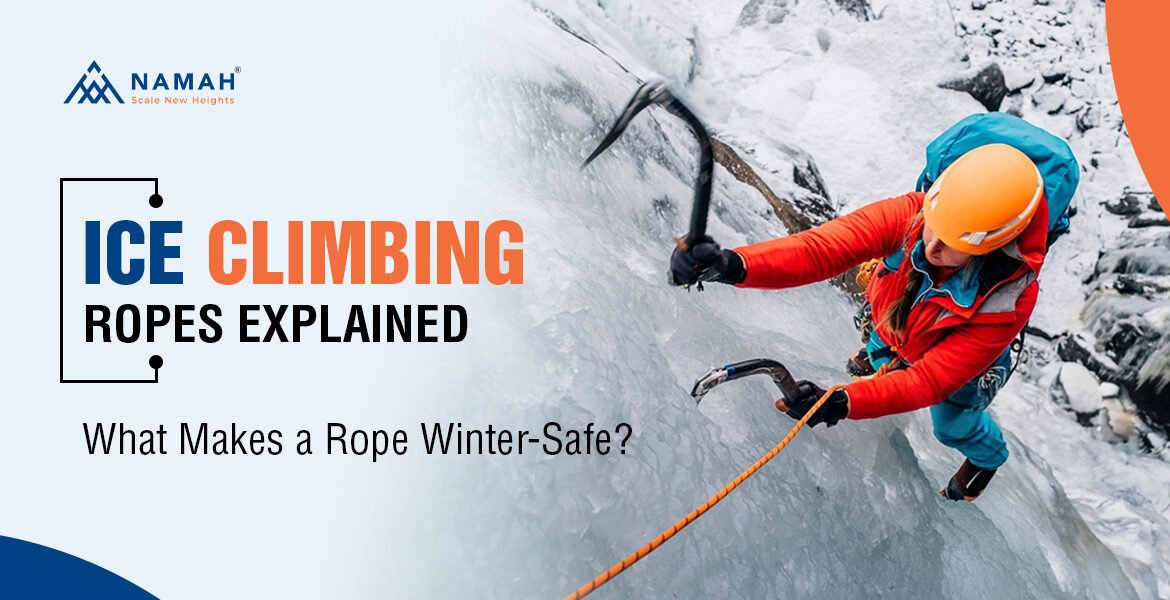
Winter climbing exposes the truth about systems. Movements slow. Metal feels sharper. Moisture behaves differently. And ropes, which feel familiar in summer, begin to reveal whether they were designed for cold reality or fair-weather assumptions.
In ice climbing, rope performance is not judged solely by strength. It is judged by how reliably the rope behaves when water seeps in, temperatures drop, and freezing cycles repeat without warning. A rope that performs perfectly on dry rock can become heavy, stiff, and unpredictable on ice, even if its laboratory ratings remain unchanged.
This is why understanding ice climbing ropes requires a winter lens. A rope becomes winter-safe not because it is strong, but because it continues to behave predictably when exposed to snow, meltwater, freezing temperatures, and prolonged moisture. This article explains what makes ropes suitable for ice climbing, how dry-treated climbing ropes respond to winter conditions, and how Namah engineers rope systems for cold, wet environments where trust must remain constant.
Why Winter Changes Rope Behaviour
Cold environments introduce stresses that rarely appear during summer climbing. Water does not simply wet the rope; it alters its structure, weight, and flexibility. Fibers respond differently when temperatures fall. Handling changes long before strength does.
In winter conditions, ropes are exposed to:
- Repeated wetting from snow and melting ice
- Freezing temperatures that stiffen untreated fibers
- Ice formation within rope structures
- Reduced dexterity when managing slack or tying knots with gloves
These factors rarely cause immediate failure. Instead, they quietly change how the rope feels, moves, and absorbs energy. When a rope absorbs water, it gains weight and loses responsiveness. If that moisture freezes, flexibility drops further, increasing perceived impact during falls and reducing control.
Understanding ice climbing ropes begins with accepting that winter safety is primarily about behaviour under exposure, not raw strength.
Start With “Why” Before Rope Specifications
Choosing a rope for winter climbing based only on diameter or fall rating misses the most important question: How does the rope behave when wet and cold?
Before looking at specifications, climbers must understand:
- Why does water absorption change handling and weight
- How freezing affects elasticity and knot behaviour
- Why does an inconsistent rope response increase system risk
Once these behaviours are clear, technical details such as elongation, treatment type, and certification become meaningful tools rather than assumptions. Winter-safe systems depend on predictability, not just compliance.
Dry Treatment: The Foundation of Winter-Safe Ropes
Dry-treated climbing ropes are engineered to limit water absorption by applying hydrophobic treatment to the sheath and, in some systems, the core. This reduces how much water enters the rope and how deeply it penetrates.
A properly treated rope:
- Gains far less weight when wet
- Retains flexibility in freezing temperatures
- Maintains consistent energy absorption
- Resists internal freezing during repeated wet–freeze cycles
Namah’s AquaBloc™ dry treatment technology limits water absorption to under five percent, exceeding UIAA dry-treatment standards. By treating individual fibers rather than relying only on surface coatings, AquaBloc™ ensures consistent handling even after prolonged exposure to snow and ice.
This level of moisture control is a defining factor in truly winter-safe ropes.
Ice Climbing Ropes and Energy Management in the Cold
Ice climbing places unique demands on fall protection. Protection points may be marginal, placements can shear, and falls often occur in complex systems involving screws, traverses, and stances rather than clean vertical lines.
Ice climbing ropes must remain dynamic even in cold conditions. Controlled elongation must be preserved when temperatures drop and moisture is present. A rope that stiffens excessively transmits higher forces through the system, increasing stress on anchors and protection.
Well-designed ice climbing ropes maintain dynamic behaviour across temperature ranges through careful fiber selection, construction control, and effective dry treatment that prevents internal stiffening.
Namah’s Lynx dynamic rope range is engineered with this balance in mind, offering predictable energy absorption while retaining supple handling in winter environments.
Rope Diameter, Handling, and Gloved Control
In winter, rope handling is rarely bare-handed. Gloves reduce tactile feedback, making knot tying and slack management more demanding. Rope diameter and surface behaviour become critical.
Thinner ropes reduce weight and bulk but demand higher precision, especially when managing slack with gloves. Slightly thicker ropes improve grip and abrasion tolerance, offering greater handling confidence at the cost of added weight.
Winter-safe ropes balance these trade-offs. They remain flexible enough to dress knots cleanly while offering sufficient surface friction for gloved control. This balance is essential for ice climbing ropes intended for real winter use rather than ideal conditions.
Dry-Treated Climbing Ropes and Long-Term Reliability
Dry treatment affects more than performance on a single climb. It also shapes how ropes age over repeated winter use.
- Resist internal abrasion caused by frozen moisture
- Maintain consistent diameter and feel
- Exhibit gradual, predictable wear patterns
This predictability improves inspection reliability. Changes in handling become noticeable early, allowing climbers to retire ropes conservatively rather than reacting to sudden performance loss.
UIAA Certification and Winter Confidence
Certifications matter most when they align with real conditions. UIAA-certified ropes are tested to ensure controlled impact forces, minimum fall ratings, and consistent elongation behaviour.
For winter climbing, certification combined with effective dry treatment builds confidence that a rope will behave within expected parameters even when wet and cold. Namah’s ropes meet UIAA standards while being engineered specifically for environments where moisture and freezing are constant challenges.
This combination allows climbers to focus on judgment and movement rather than second-guessing equipment.
Supporting Winter Systems: Semi-Static Ropes
While dynamic ropes handle fall protection, semi-static ropes play an important supporting role in winter systems. Fixed lines, hauling systems, rappels, and rescue setups demand stability rather than energy absorption.
Namah’s Indus semi-static ropes are commonly used in cold environments where low stretch, durability, and predictable positioning matter.
🔗 Product reference:
https://www.namahropes.com/product/indus-9-0-mm/
Used correctly, these ropes support winter objectives without compromising safety.
Inspection and Care in Cold Environments
Winter accelerates rope fatigue if care routines are neglected. After ice climbing, ropes should be allowed to dry fully in a shaded, ventilated space. Inspection should focus on:
- Stiffness or uneven flexibility
- Flat spots or glazing
- Changes in knot behaviour
Because ice climbing ropes experience repeated moisture exposure, tactile inspection is especially important. Feel often reveals degradation before appearance does.
Common Mistakes in Winter Rope Selection
Many winter rope failures result from incorrect assumptions rather than material defects. Common mistakes include:
- Using untreated ropes in wet, freezing environments
- Assuming all dry-treated climbing ropes perform equally
- Ignoring early handling changes
- Choosing ropes based solely on diameter or weight
Winter safety depends on matching rope behaviour to environmental reality.
A Long View on Winter-Safe Ropes
Winter safety is rarely dramatic. It is built through understanding how ropes behave when conditions turn cold, wet, and unpredictable. Ice climbing ropes that combine effective dry treatment, controlled dynamic performance, and consistent handling allow climbers to move with confidence rather than caution.
When winter-safe ropes are chosen for behaviour rather than claims, and when inspection habits respect the demands of cold environments, systems remain calm and predictable. The right rope does not demand attention. It works quietly, even when ice, snow, and cold test every other part of the climb.
That is what makes a rope truly winter-safe.