

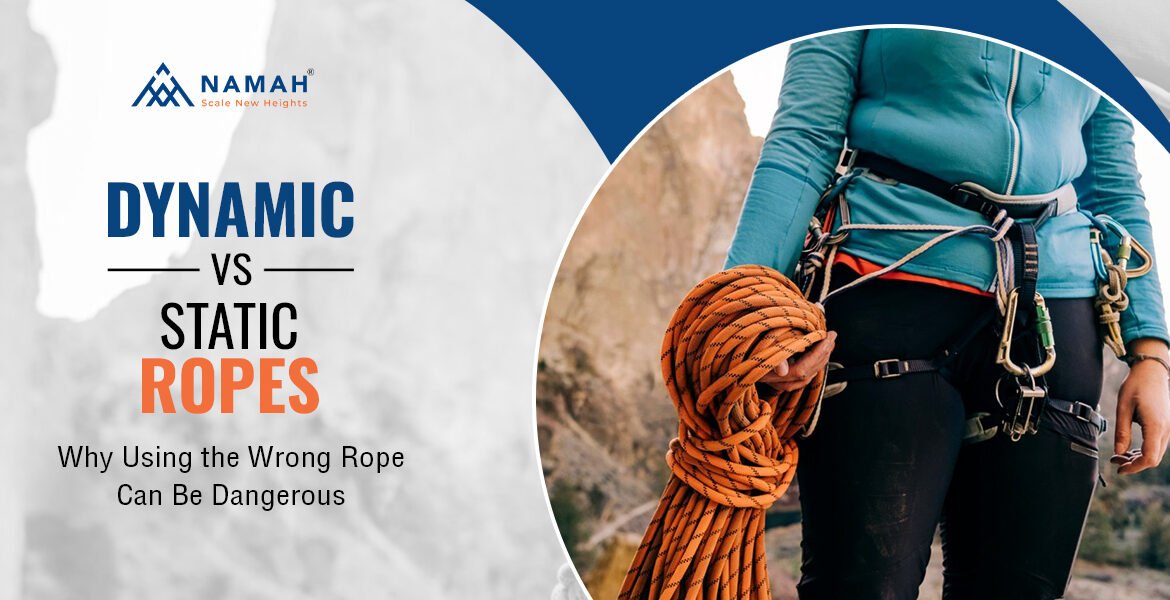
In vertical environments, rope selection is not a preference. It is a technical decision that directly affects safety. Climbers, industrial workers, and rescue professionals often focus on strength ratings alone. But the real difference lies in how ropes behave under load.
Understanding dynamic vs static ropes is essential because each type is engineered for fundamentally different functions. Using one in place of the other can significantly increase impact forces, compromise anchors, and reduce overall system reliability.
The Fundamental Behaviour Difference
The most important technical factor separating these ropes is elongation.
Dynamic ropes are designed to stretch under load. Static ropes are engineered to remain stable with minimal stretch.
The static rope vs dynamic rope difference lies in energy absorption. Dynamic ropes elongate during a fall, reducing peak impact forces. Static ropes transfer load directly with minimal shock absorption.
This behavioural distinction determines where each rope belongs in a safety system.
What Happens During a Fall
When a climber falls, the rope absorbs kinetic energy. A dynamic rope stretches, spreading that energy over time. This reduces the force transmitted to:
- The climber
- The anchor
- The belayer
- Protection placements
A dynamic rope for fall protection is specifically engineered to manage these forces safely. Without controlled elongation, impact loads increase dramatically.
If a static rope is used in a lead climbing scenario, the lack of stretch can result in higher shock loads, increasing the risk of anchor failure or injury.
Static Ropes: Designed for Stability, Not Falls
Static ropes are ideal for situations where movement needs to be controlled and predictable. These include:
- Rope access systems
- Rappelling
- Hauling equipment
- Rescue operations
They are not designed to absorb large dynamic loads. Using static ropes in fall scenarios introduces significant static rope safety risks, especially when anchor systems are not designed for high shock forces.
The rope itself may not fail. The system around it might.
When to Use Each Rope Type
Use Dynamic Ropes When:
- Lead climbing
- Ice climbing
- Situations where falls are possible
- Technical rescue involving dynamic loading
A certified dynamic rope for fall protection provides controlled elongation and tested impact ratings.
Namah’s Lynx Dynamic Rope range is engineered to deliver predictable energy absorption and consistent performance under load.
🔗 Lynx Dynamic Rope
https://www.namahropes.com/dynamic-ropes/
Use Static Ropes When:
- Fixed rope systems
- Industrial rope access
- Controlled descents
- Positioning work at height
Namah’s Indus Semi-Static Rope range is designed for stable, low-elongation performance in professional vertical systems.
🔗 Indus Semi-Static Ropes
https://www.namahropes.com/product-category/semi-static-ropes/
Why Using the Wrong Rope Can Be Dangerous
The danger in confusing dynamic vs static ropes lies in misunderstanding load behaviour.
If a climber uses a static rope during lead climbing:
- Impact force increases
- Anchor stress increases
- Equipment shock loading rises
- Injury risk rises
Conversely, using a dynamic rope in systems that require precise positioning can introduce unwanted stretch and instability.
The issue is not rope strength. It is rope behaviour under stress.
Understanding System Design
Rope safety is never about a single component. It is about how the rope integrates with:
- Anchors
- Connectors
- Belay devices
- Harness systems
Misunderstanding the static rope vs dynamic rope difference can compromise the entire safety setup.
Proper system design matches rope type with the intended load profile.
Real-World Scenarios
Scenario 1: Industrial Work at Height
A worker sets up a fixed line using a dynamic rope. Under load, the rope elongates more than expected, causing positioning instability.
Scenario 2: Lead Climbing with Static Rope
A climber falls onto a static line. The rope does not absorb energy effectively, increasing peak impact forces and introducing severe static rope safety risks.
In both cases, the rope performs exactly as engineered. The problem lies in application mismatch.
Standards and Certifications Matter
Dynamic ropes are tested under strict fall-factor scenarios. Static ropes are tested for tensile strength and low elongation under working loads.
These tests reflect intended use.
A dynamic rope for fall protection must meet impact force and elongation requirements. Static ropes are tested differently because they serve a different purpose.
Matching certification to application ensures predictable performance.
Choosing Correctly
When selecting between dynamic vs static ropes, ask:
- Will the rope need to absorb a fall?
- Is positioning stability more important than energy absorption?
- What type of load will dominate?
- Are anchors rated for dynamic shock loads?
Clarity on these questions prevents misuse
Engineering Perspective
Dynamic ropes are constructed with core designs that allow controlled stretch. Static ropes prioritise strength and stability with limited elongation.
This engineering distinction is deliberate. It defines their safe operating boundaries.
Ignoring those boundaries introduces risk.
Closing Thoughts
Ropes do not fail randomly. They fail when used outside their intended design parameters. The difference between dynamic vs static ropes is not cosmetic. It is structural, behavioural, and safety-critical.
Choosing the correct rope is not about preference or price. It is about understanding how forces travel through a system. When the rope type matches the application, safety margins remain intact. When it does not, risk multiplies quietly.
In vertical environments, safety begins with understanding behaviour, not just strength.