


Welcome to the Thirty- Second edition of ClimbLife – our bi-monthly newsletter where we bring to you a curated collection of climbing facts & history, the latest news, the latest products in our offering, and the climber of the edition.
Namah – A brand from an organization established since 1898, specializing in the manufacturing and exporting of high-quality UIAA/CE certified Ropes and Safety Harnesses.
Climbing Facts & History
Mount Rainier: The Glaciated Giant of the Pacific Northwest
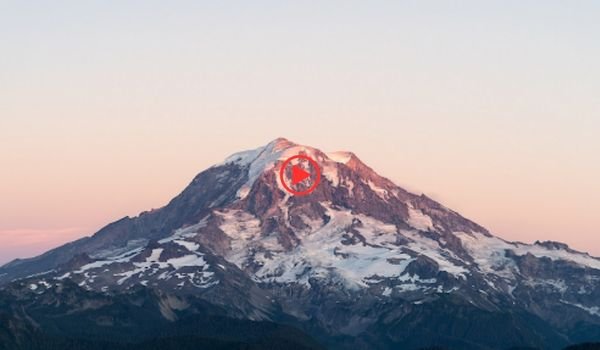
Mount Rainier is the highest mountain in the U.S. state of Washington and one of the most recognizable peaks in North America. Rising to about 4,392 meters (14,410 feet), it dominates the skyline of the Pacific Northwest and can be seen from cities like Seattle and Tacoma on clear days. The mountain lies within Mount Rainier National Park, a protected landscape known for its dense forests, alpine meadows, and spectacular wildflower blooms.
Geologically, Mount Rainier is an active stratovolcano that formed through layers of lava flows and volcanic debris over hundreds of thousands of years. Although its last major eruption occurred roughly a thousand years ago, scientists continue to monitor the mountain closely because of its volcanic nature and the possibility of large mudflows, known as lahars, that could affect surrounding valleys.
Another remarkable feature of Mount Rainier is its extensive glaciation. It is the most heavily glaciated peak in the contiguous United States, with more than two dozen glaciers covering its slopes. These glaciers feed rivers that support ecosystems and communities throughout the region.
Today, Mount Rainier is a major destination for hikers, climbers, and outdoor enthusiasts. Each year, thousands attempt to reach its summit, making it one of the most popular mountaineering challenges in the United States.
View MoreIn The News
Winter Ascent of the Zmutt Nose
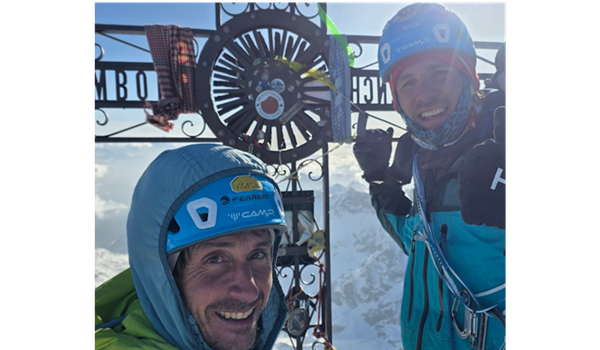
Italian alpinists Matteo Della Bordella and Giacomo Mauri recently completed a remarkable winter ascent of the Gogna-Cerruti route on the Zmutt Nose of the Matterhorn. The climb took place on 7–8 March 2026 and required two days of sustained effort in extremely demanding winter conditions.
The Zmutt Nose is widely considered one of the most serious and technical faces in the Alps. First climbed in 1969 by Alessandro Gogna and Leo Cerruti, the route is known for its steep rock walls, mixed terrain, and high exposure. Because of unstable weather and complex route finding, winter ascents remain rare and highly challenging.
Della Bordella and Mauri climbed the route in alpine style, carrying limited equipment and moving efficiently along the face. Throughout the ascent they tackled technical rock pitches, ice-filled cracks, and long exposed sections while coping with freezing temperatures and shifting mountain conditions.
Completing such a historic and demanding line in winter highlights both the climbers’ technical skill and their endurance. Achievements like this continue to push the boundaries of modern alpinism while honoring the tradition of bold, committed climbing in the high mountains.
View MoreProduct Spotlight
INDUS 9.0 mm: Precision and Reliability in Vertical Terrain

The INDUS 9.0 mm semi-static rope from Namah Ropes is designed for professionals and adventurers who operate in demanding vertical environments. Built as a Type B semi-static rope, it offers an effective balance between strength, lightweight handling, and durability. This makes it suitable for activities such as caving, canyoning, rescue operations, and rope access work where reliability and control are essential.
With a diameter of 9.0 mm and a weight of around 52 grams per meter, the rope provides excellent portability while maintaining strong performance. Its polyamide construction and 32-carrier sheath structure enhance durability and provide consistent handling during descents and technical maneuvers. A robust sheath proportion also improves abrasion resistance, allowing the rope to perform reliably against rough rock surfaces and high-friction environments often encountered in caves and steep terrain.
Additional design elements such as ultrasonic-sealed ends, a clear midpoint marker, and a heat-treated sheath further improve durability, safety, and rope management in the field. The INDUS 9.0 mm stands out as a dependable rope for technical exploration and professional vertical work.
View DetailsHilaree Nelson: A Pioneer of Ski Mountaineering
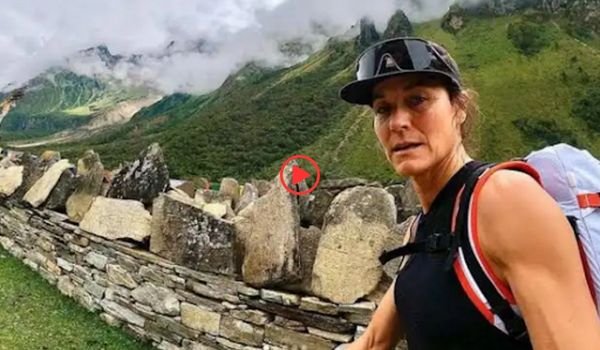
Hilaree Nelson was one of the most influential figures in modern ski mountaineering, known for blending elite climbing with daring ski descents on some of the world’s highest peaks. Born in Seattle in 1972, she developed a deep passion for skiing early in life and later transformed it into a career defined by exploration, endurance, and groundbreaking achievements.
Over the course of her career, Nelson participated in more than forty expeditions across major mountain ranges around the world. She consistently pushed the limits of high-altitude skiing and mountaineering, often taking on technically demanding routes that few athletes had attempted before.
Everest and Lhotse within a single 24-hour push. Her achievements continued in 2018 when she and her partner completed the first ski descent of the “Dream Line” from the summit of Lhotse, considered one of the most difficult ski descents ever attempted on an 8,000-meter peak.
Nelson passed away in 2022 while descending Manaslu, leaving behind a legacy of courage, exploration, and inspiration in the mountaineering community.
Watch NowIndustry insights
Himalayan Mountaineering Institute: The Mecca of Indian Mountaineering
The Himalayan Mountaineering Institute (HMI) in Darjeeling, India, is one of the world’s most respected centers for mountaineering education. Established on 4 November 1954 by Jawaharlal Nehru, the institute was created to commemorate the historic first ascent of Mount Everest in 1953 by Tenzing Norgay and Edmund Hillary. Their achievement ignited global interest in Himalayan exploration and inspired India to develop a formal institution dedicated to mountaineering training.
Located on Jawahar Parbat in the Himalayan foothills, HMI quickly gained international recognition for its rigorous training programs and strong connection to the climbing community. Often referred to as the “Mecca of Indian Mountaineering,” the institute has trained thousands of climbers from India and across the world. Its courses cover mountaineering, rock climbing, glacier travel, rescue techniques, and high-altitude survival. The campus also houses the renowned Mountaineering Museum, which preserves equipment, photographs, and artifacts from historic Himalayan expeditions, including early Everest climbs. Over the decades, the institute has played a major role in shaping India’s mountaineering culture.
More than just a training center, the Himalayan Mountaineering Institute promotes discipline, teamwork, and deep respect for fragile mountain ecosystems values that define responsible exploration in the Himalayas.
Explore The Himalayan Mountaineering Institute (HMI)The summit is just the beginning with Namah – ClimbLife.
Stay connected! Follow us on Instagram and Facebook for daily updates, tips, and more. Remember, every climb begins with a single step, and we’re here to support you every step of the way.
Happy Climbing!
If you have feedback for us or want to reach out to us regarding something, feel free to contact us via the details provided below.
Write an email to info@namahropes.com (or) Call +91 98111 80634 to get connected with our team.