

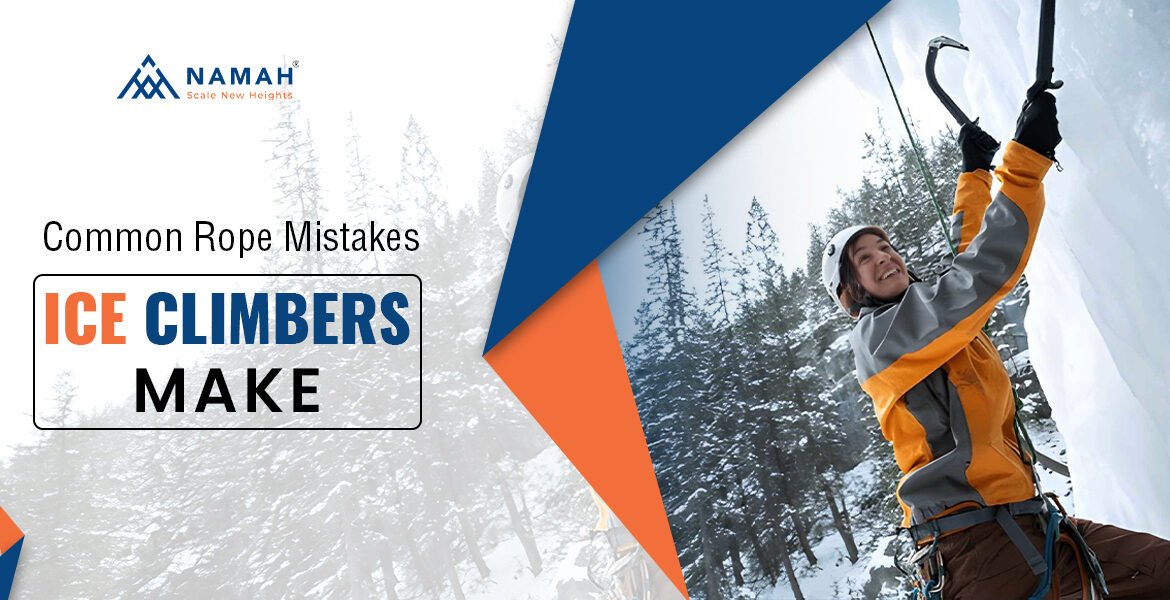
Ice climbing is unforgiving. Unlike rock, ice shifts with temperature, fractures unpredictably, and constantly exposes equipment to moisture and cold. In this environment, rope performance is not only about strength. It is about behaviour under freezing conditions, water exposure, and abrasion.
Many accidents attributed to gear are not caused by sudden failure. They result from small oversights in rope choice, inspection, handling, or storage. Understanding common ice climbing rope mistakes helps climbers reduce risk and preserve long-term performance.
1. Using Non-Dry Ropes in Wet Ice Conditions
One of the most frequent ice climbing rope mistakes is using ropes without proper moisture protection. Ice climbing exposes ropes to snow, meltwater, and repeated freeze–thaw cycles.
When a rope absorbs water:
- It becomes heavier
- It stiffens in sub-zero temperatures
- Handling becomes more difficult
- Dynamic performance may change
In winter conditions, a dry treated climbing rope resists water penetration and maintains flexibility even when temperatures drop. Without treatment, ropes can freeze, making belaying and rope management significantly harder.
How to Avoid It
Choose ropes engineered specifically for cold environments. Namah’s Lynx Dynamic Rope with AquaBloc technology is designed to minimise water absorption and retain consistent handling in alpine and frozen conditions.
🔗 Lynx Dynamic Rope
https://www.namahropes.com/dynamic-ropes/
Moisture resistance is not optional in winter climbing. It directly affects ice climbing rope safety.
2. Ignoring Abrasion from Ice and Hardware
The ice is not smooth. Tools, crampons, screws, and rough ice surfaces create multiple abrasion points. Climbers often underestimate the cumulative effect of friction.
Common abrasion-related issues include:
- Sheath fuzzing from repeated contact
- Wear near anchors
- Rope drag over sharp ice formations
Abrasion rarely causes immediate failure. It gradually weakens the outer sheath, reducing long-term durability.
How to Avoid It
- Minimise rope drag
- Avoid sharp directional changes
- Inspect high-contact zones after every climb
- Replace ropes showing significant sheath damage
Abrasion awareness is a key component of winter climbing rope care and overall system longevity.
3. Using the Wrong Rope Type for Lead Ice Climbing
Another critical example among ice climbing rope mistakes is using static ropes for lead climbing. Static ropes provide minimal elongation and are not designed to absorb fall forces.
Dynamic ropes are engineered to stretch under load, reducing peak forces on climbers and anchors.
How to Avoid It
Use a certified dynamic rope for lead ice climbing. The rope must provide controlled elongation while maintaining strength and handling in cold conditions.
Namah’s Lynx Dynamic Rope range is designed for technical climbing environments where energy absorption and consistency are essential.
🔗 Dynamic Rope Range
https://www.namahropes.com/dynamic-ropes/
Selecting the correct rope type significantly improves ice climbing rope safety.
4. Skipping Pre-Climb Rope Inspection
Cold temperatures can mask rope damage. Frozen stiffness can feel similar to fiber degradation.
Before every climb, check for:
- Soft spots in the core
- Flat or compressed sections
- Sheath damage
- Inconsistent flexibility
A proper inspection reduces risk and improves performance reliability.
This practice should be part of regular winter climbing rope care, especially after exposure to moisture and abrasion.
5. Improper Storage After Ice Climbing
After climbing, ropes are often wet. Storing them without drying accelerates fiber fatigue and internal degradation.
Moisture trapped in fibers can:
- Reduce flexibility
- Increase stiffness in future climbs
- Shorten the rope’s lifespan
A dry treated climbing rope reduces water absorption but still requires proper post-climb care.
How to Avoid It
- Dry ropes in a ventilated environment
- Avoid direct heat sources
- Store in a cool, dry place
- Keep away from chemicals
Good storage habits prevent many recurring ice climbing rope mistakes over time.
6. Overextending Rope Service Life
Climbers sometimes delay rope replacement because visible damage seems minor. However, ropes exposed to cold, moisture, and repeated loading degrade internally over time.
Warning signs include:
- Excessive sheath fuzz
- Reduced flexibility
- Diameter inconsistencies
- Noticeable handling changes
Retirement decisions should prioritise safety margins rather than cost recovery.
Engineering Matters in Ice Environments
In winter climbing, rope behaviour depends on:
- Fiber composition
- Core-to-sheath ratio
- Moisture resistance
- Dynamic elongation properties
- Abrasion tolerance
Namah’s AquaBloc-treated ropes are engineered to reduce water absorption and preserve performance in cold conditions.
🔗 AquaBloc Technology
https://www.namahropes.com/advanced-cut-resistant-ropes/
These design features directly support long-term performance and help prevent ice climbing rope mistakes caused by environmental stress.
Final Thoughts
Ice climbing demands respect for both the environment and the equipment. Small oversights in rope selection, inspection, or storage can accumulate into serious risk.
Avoiding common ice climbing rope mistakes begins with choosing the right rope, maintaining it carefully, and understanding how cold and moisture influence performance. When climbers treat rope care as part of a complete system rather than an afterthought, safety becomes consistent rather than reactive.
In winter conditions, reliability is not assumed. It is engineered, inspected, and preserved.