
Climbing has a way of sharpening your awareness. Whether you’re stepping onto a gym wall for the first time or gearing up for an outdoor route, your safety depends not just on strength or technique, but on the climbing gear you trust with every move. Equipment doesn’t just support the climb. It supports decision-making, confidence, and calm when things don’t go exactly as planned.
Modern climbing has evolved rapidly, and so has rope climbing gear. Materials are lighter, designs are smarter, and safety standards are clearer than ever. But with more choice comes responsibility. Knowing what to use, when to use it, and why it matters is essential for climbers at every level.
This guide breaks down essential climbing safety equipment, explains how needs change across environments and experience levels, and shows how well-designed gear like that developed at Namah fits into real climbing systems rather than standing apart from them.
Core Types of Climbing Gear
At its foundation, climbing safety relies on a small set of critical components. Each piece of climbing gear plays a distinct role, and together they form a system where no single element works alone.
Climbing Ropes
Ropes are the lifeline of the entire system. In rope climbing gear, this is the component that absorbs force, connects climber to belayer, and turns a fall into a controlled event rather than a dangerous one.
Dynamic ropes are designed to stretch under load, reducing impact force during falls, making them essential for lead climbing. Static and semi-static ropes, on the other hand, are used for rappelling, rescue, and rope access where controlled movement is more important than shock absorption.
Namah’s climbing ropes are engineered with these distinctions in mind, ensuring predictable handling, consistent elongation, and durability across both indoor and outdoor environments.
Harnesses
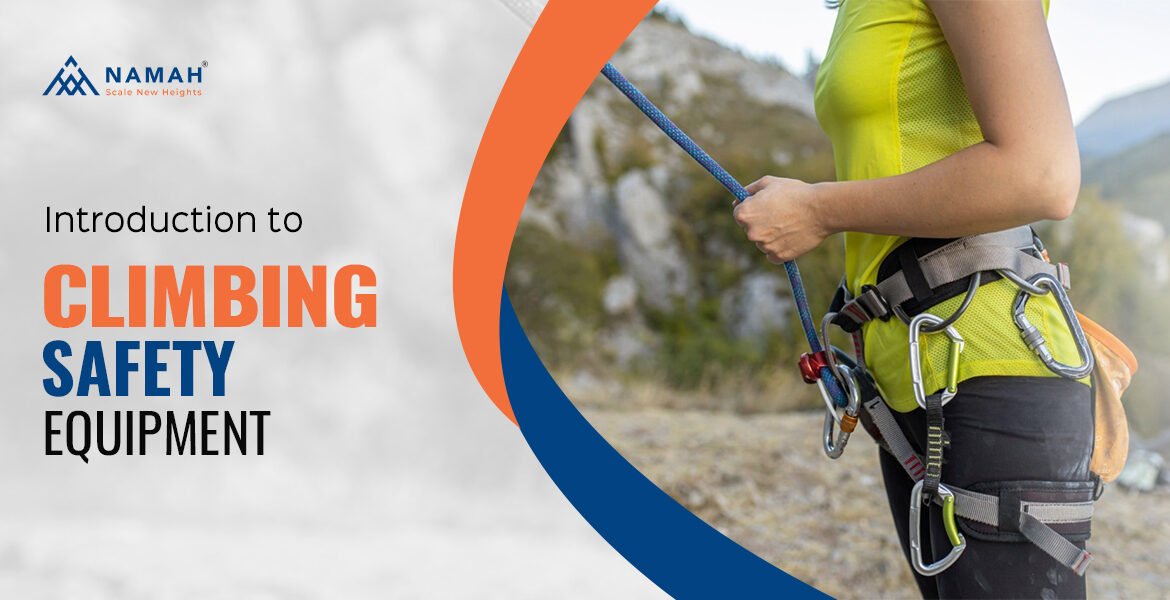
A harness is where the system meets the body. Good harness design balances security with comfort, especially during long belays or repeated falls. For rope climbing gear, the harness must distribute load evenly while allowing freedom of movement.
Sport harnesses tend to be lightweight and minimal, while harnesses designed for outdoor or multi-pitch climbing offer more padding and gear loops. Namah’s harnesses are built to maintain structure under load while remaining comfortable during extended use.
Climbing Helmets
Helmets are often overlooked in indoor settings but are critical outdoors. Falling rock, dropped equipment, and unexpected slips all pose head injury risks. Modern helmets are light, ventilated, and designed to be worn all day without discomfort.
When selecting helmets as part of your climbing gear, compatibility with headlamps and secure fit should matter as much as impact ratings.
Carabiners and Belay Devices
These are the connectors and controllers of the system. Carabiners link rope to harness and anchors, while belay devices manage friction and braking.
For rope climbing gear, locking carabiners and assisted-braking belay devices add layers of safety, especially for beginners or high-frequency use. Shape, gate type, and material all influence how these tools perform in real scenarios.
Rope-Specific Safety Gear
Beyond the rope itself, rope climbing gear includes tools and accessories designed to protect both the climber and the rope.
Rope bags reduce dirt and abrasion, extending rope life. Gloves protect hands during long belays or rappels. Anchor slings and runners help distribute load safely. Each of these elements reduces wear and risk, particularly in outdoor environments where conditions are unpredictable.
Namah’s rope accessories are designed to integrate seamlessly with their rope systems, reinforcing safety without adding complexity.
Indoor vs Outdoor Climbing Equipment
Not all climbing gear serves every environment equally.
Indoor climbing prioritises ease of use, frequent falls, and controlled conditions. Ropes tend to see less abrasion, and helmets are often optional. Equipment is optimised for repetition and comfort.
Outdoor climbing introduces variables: weather, rock texture, longer routes, and exposure. Here, rope climbing gear must withstand UV exposure, moisture, and sharp edges. Helmets become essential, ropes need stronger sheaths, and redundancy matters more.
Understanding these differences helps climbers choose gear that matches where and how they climb.
Beginner vs Advanced Climbing Kits
A common mistake is assuming beginners need “basic” gear and advanced climbers need “better” gear. In reality, beginners need more forgiving and intuitive climbing gear, while advanced climbers often choose more specialised equipment.
Beginner Kits
Beginner rope climbing gear should prioritise safety, ease of inspection, and compatibility. Thicker dynamic ropes, assisted-braking belay devices, comfortable harnesses, and clearly rated carabiners reduce the chance of user error.
Advanced Kits
Experienced climbers often fine-tune their systems. Rope diameter, weight, and handling become strategic choices. Advanced climbers may use multiple ropes, specialised harnesses, and lighter hardware tailored to route type and style.
Namah supports both ends of this spectrum by offering gear that scales with skill rather than forcing premature upgrades.
Product Recommendations (Use-Case Based)
Rather than listing products by category, it’s more useful to think in systems:
- Indoor sport climbing: Dynamic rope, lightweight harness, assisted-braking belay device
- Outdoor single-pitch climbing: Dynamic rope with robust sheath, helmet, locking carabiners
- Multi-pitch or rescue scenarios: Dynamic rope paired with slings, backup devices, gloves
Namah’s climbing safety equipment is designed to function reliably across these systems, focusing on predictable behavior rather than marketing features.
Visual Comparison Tables (Suggested for Page Design)
This blog can be supported by tables such as:
- Indoor vs Outdoor climbing gear comparison
- Beginner vs Advanced rope climbing gear kits
- Dynamic vs Static rope use cases
These visuals help users make faster, more confident decisions
FAQs: Climbing Gear & Rope Climbing Gear
Q: How often should climbing ropes be replaced?
A: It depends on usage, falls, and exposure. Regular inspection is essential.
Q: Can the same rope be used indoors and outdoors?
A: Yes, but outdoor use accelerates wear due to dirt and UV exposure.
Q: Is thicker rope always safer?
A: Not necessarily. Thicker ropes are more durable, but compatibility with belay devices matters.
Q: Should beginners use assisted-braking belay devices?
A: Yes, they add a valuable safety margin while learning.
A Thoughtful Approach to Safety
Good climbing gear doesn’t announce itself. It supports focus, confidence, and learning without distraction. The best rope climbing gear works quietly in the background, allowing climbers to build skill and judgment over time.
At Namah, safety equipment is designed with this philosophy gear that respects the realities of climbing, adapts across environments, and earns trust through consistent performance rather than claims.
Because in climbing, safety isn’t a feature. It’s a system.