

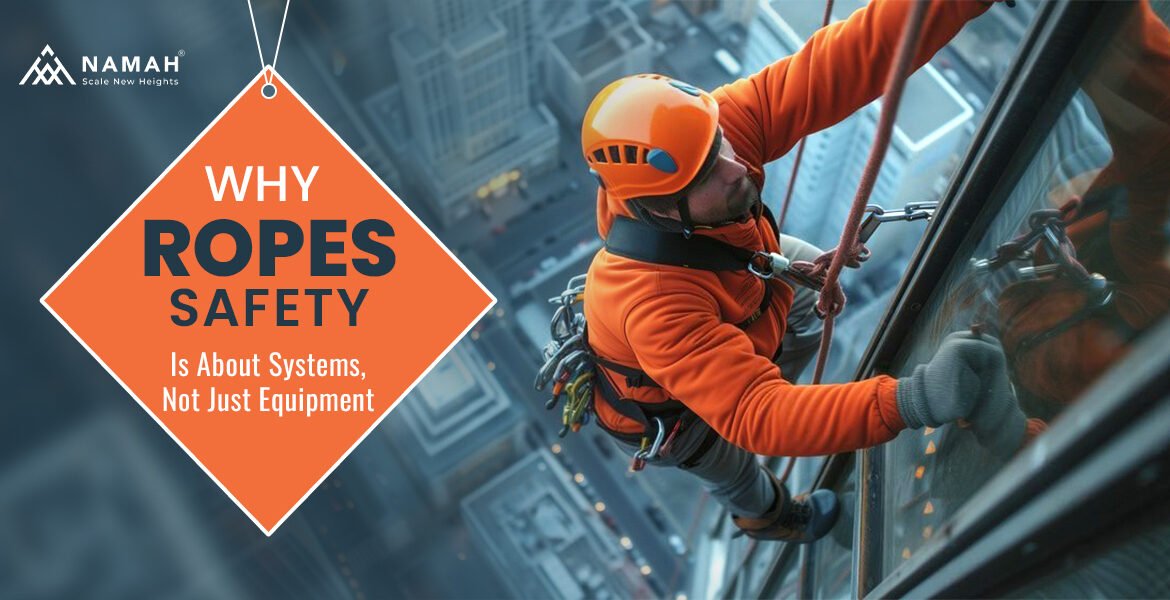
Working at height is rarely about a single component. A rope, no matter how strong, does not function in isolation. It is part of a broader arrangement that includes anchors, connectors, harnesses, descent devices, backup systems, and the people who use them. When something fails at height, it is rarely because a single piece of equipment suddenly breaks. More often, it is because the overall system was incomplete, mismatched, or poorly understood.
This is why modern safety practice focuses on the idea of a rope safety system for work at height rather than just individual pieces of gear. Equipment matters, but safety is created by how every component works together under real conditions.
The Limits of Equipment-Centric Thinking
Many safety conversations start with a simple question: Which rope or device is the safest? While that seems logical, it overlooks how most incidents actually occur. Failures are rarely caused by equipment alone. They are typically the result of incorrect anchors, incompatible components, missing backups, or poor inspection routines.
This is where the rope system vs safety equipment difference becomes important. Equipment refers to individual items such as ropes, harnesses, connectors, or descenders. A system refers to how these items interact under load, movement, and environmental stress.
A high-quality rope used in an incomplete or poorly designed setup does not create safety. True safety emerges from correct system design, proper installation, and disciplined use.
What Defines a Rope Safety System for Work at Height
A proper rope safety system for work at height is built around redundancy, compatibility, and controlled load paths. It ensures that if one component fails, another prevents a catastrophic outcome.
A typical system includes:
- Primary working rope
- Backup safety rope
- Certified anchor points
- Connectors and descent devices
- Harness and fall arrest components
- Inspection and maintenance routines
The goal is not just strength, but predictability. Each component must behave in a known and controlled way under expected loads.
Standards That Shape Modern Rope Safety Systems
International safety standards exist to ensure consistency in equipment performance and system design.
An OSHA-compliant rope safety system includes:
- Approved anchor strength ratings
- Defined fall arrest distances
- Equipment compatibility requirements
- Worker training and inspection protocols
Similarly, EN-certified rope safety equipment ensures that ropes, connectors, and devices meet tested performance benchmarks under controlled conditions.
Standards establish minimum performance thresholds. However, real safety depends on how these certified components are integrated into a functioning system.
The Role of Industrial Rope Safety Standards
Modern vertical work environments rely on established industrial rope safety standards to guide system design. These standards help ensure:
- Proper anchor selection
- Load distribution across components
- Correct rope selection for the task
- Consistent inspection and retirement procedures
They also account for environmental factors such as abrasion, moisture, chemicals, and repeated loading. A rope chosen purely for strength may not perform reliably if it is not suited to the working conditions.
Why Most Fall Incidents Are System Failures
In real-world operations, incidents rarely occur because a rope snaps without warning. Most accidents are the result of system-level issues.
Common fall protection system failures include:
- Weak or improperly installed anchor points
- Incompatible connectors or devices
- Missing backup lines
- Incorrect knots or attachment methods
- Poor or neglected inspection routines
These failures highlight an important truth: safety is not about one component performing perfectly. It is about the entire system functioning as intended.
Inspection: The Most Overlooked System Component
Inspection is not just a routine task. It is a critical part of the safety system itself. Without regular checks, even a well-designed setup can become unsafe over time.
A practical rope inspection checklist for construction should include:
- Visual checks for abrasion, cuts, or glazing
- Feeling for stiffness or inconsistent flexibility
- Verifying anchor integrity
- Checking connectors and descent devices
- Confirming compatibility across the system
Routine inspections help identify early signs of wear or misuse before they develop into serious hazards.
Equipment Quality Still Matters Within the System
While rope safety is fundamentally about systems, the reliability of each component still forms the foundation of that system. A well-designed arrangement cannot compensate for inconsistent or poorly manufactured equipment.
In industrial environments, semi-static ropes are commonly used as primary or backup lines because they offer controlled elongation and stable positioning. Namah’s Indus semi-static rope range is engineered for these applications, providing predictable handling and durability within a rope safety system.
That is when rope safety moves beyond gear and becomes part of how work is done.
🔗 Indus semi-static ropes
https://www.namahropes.com/product-category/semi-static-ropes/
In situations where dynamic loads may occur, such as rescue or fall-arrest scenarios, dynamic ropes are used to absorb energy in a controlled manner. Namah’s Lynx dynamic rope range is designed to provide controlled elongation and consistent performance in such systems.
That is when rope safety moves beyond gear and becomes part of how work is done.
🔗 Lynx dynamic climbing ropes
https://www.namahropes.com/dynamic-ropes/
Used correctly, these ropes form part of a complete rope safety system for work at height, where each component supports the others rather than operating independently.
Training and Human Factors in Rope Safety
Even the most advanced equipment cannot compensate for poor judgment or incomplete training. Human factors remain one of the most important elements of any rope safety system.
Effective practices include:
- Proper training in rope handling and system setup
- Understanding load paths and anchor selection
- Regular inspection habits
- Clear communication among team members
When workers understand how systems behave under load, they make safer and more informed decisions.
Building a Culture of System-Based Safety
Organisations that approach safety as a system rather than a checklist often experience fewer incidents and more predictable operations. This shift involves:
- Designing complete systems instead of assembling parts
- Prioritising compatibility over convenience
- Treating inspection as part of the system
- Training workers to think in systems, not just equipment
A well-integrated rope safety system for work at height creates layers of protection that support one another.
A Long View on Rope Safety
Safety at height is rarely about a single component or a single moment. It is built through systems that behave predictably, even when conditions change. Ropes, anchors, connectors, and procedures must work together, not simply coexist.
When systems are designed with redundancy, inspected with discipline, and used with understanding, safety becomes quieter and more reliable. Equipment stops being the focus, and the system becomes the foundation.
That is when rope safety moves beyond gear and becomes part of how work is done.