

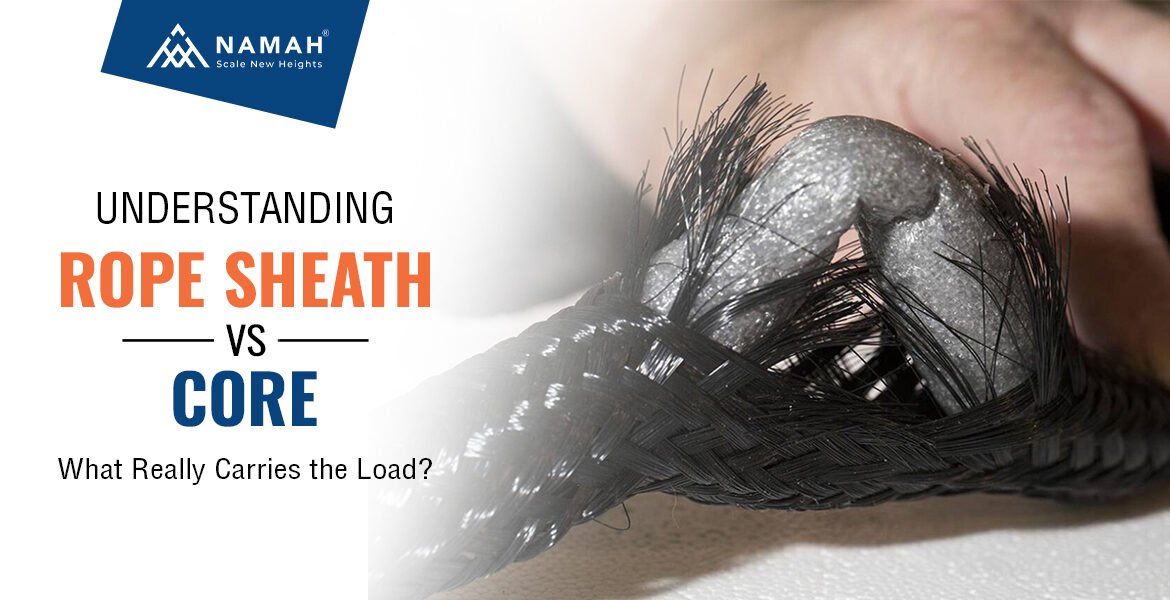
The first time someone cuts open a climbing rope, it’s usually out of curiosity. From the outside, it looks simple. A woven outer layer, a flexible structure, something you trust without thinking too much about what’s inside. But once the rope is opened, the reality becomes clearer. The outer sheath is only part of the story. Inside, there is a dense, carefully engineered core that quietly carries most of the responsibility.
Understanding rope sheath vs core construction is one of those things that changes how you look at ropes forever. What appears as a single piece of equipment is actually a system built in layers, each with a distinct purpose. And when it comes to safety, performance, and durability, knowing what each part does matters more than most people realise.
The First Misconception Most People Have
It is natural to assume that the visible outer layer of the rope carries the load. After all, that is the part we see, touch, and inspect. When the sheath shows wear, we immediately think the rope is weakening.
In reality, the climbing rope’s core strength is responsible for handling the majority of the load. The core is made up of multiple parallel fibers designed to absorb tension, manage elongation, and maintain structural integrity under stress.
The sheath, while essential, plays a different role. It protects the core from abrasion, UV exposure, and environmental damage. It also contributes to handling and friction, but it is not the primary load-bearing component.
This distinction is at the heart of understanding rope behaviour.
What the Core Really Does
The core is where the engineering lives. It is designed to handle forces that occur during climbing, rope access, or industrial use.
In dynamic ropes, the core stretches to absorb fall energy. In static ropes, it remains stable to support controlled positioning. The behaviour changes depending on the rope type, but the responsibility remains the same.
The idea of load distribution in climbing ropes becomes clearer when you consider how the core works. Instead of a single strand taking the load, multiple fibers share the tension. This distributes stress evenly, reducing the risk of sudden failure.
Namah’s rope construction focuses on maintaining consistent core performance, ensuring that the rope behaves predictably across different conditions.
The Role of the Sheath
If the core carries the load, the sheath protects it from everything else.
The sheath is designed to handle:
- Abrasion from rock, ice, or industrial surfaces
- Friction from devices and hardware
- Exposure to dirt, moisture, and UV light
The rope sheath durability importance becomes obvious in environments where ropes are exposed to constant friction. A damaged sheath does not immediately mean the rope will fail, but it does signal that the core is becoming vulnerable.
A well-constructed sheath slows down wear and extends the overall life of the rope.
Namah’s Lynx Dynamic Rope range uses a balanced sheath-to-core ratio to ensure durability without compromising flexibility.
🔗 Lynx Dynamic Rope
https://www.namahropes.com/dynamic-ropes/
When Sheath Damage Becomes a Concern
Every rope shows signs of wear over time. Slight fuzzing or surface abrasion is normal. But there is a point where sheath damage starts affecting safety.
The rope sheath vs core damage difference becomes critical here.
Sheath damage may include visible wear, fraying, or discoloration. Core damage, on the other hand, is harder to detect. It often shows up as soft spots, flat sections, or inconsistent rope diameter.
When the core is compromised, the rope loses its ability to distribute load effectively. This is when replacement becomes necessary.
Understanding this difference helps climbers and professionals make better decisions about rope retirement.
How Construction Affects Performance
Rope performance is not just about materials. It is about how those materials are arranged.
Core-to-sheath ratio determines how a rope balances strength, durability, and handling. A rope with a thicker sheath may last longer in abrasive environments, while a rope with a more optimized core may perform better in dynamic situations.
The concept of load distribution in climbing ropes depends heavily on this balance. Too much focus on one layer can affect overall performance.
Namah’s Indus Semi-Static Rope range is designed to maintain structural stability while ensuring consistent handling in rope access and industrial applications.
🔗 Indus Semi-Static Rope
https://www.namahropes.com/product-category/semi-static-ropes/
Environmental Impact on Sheath and Core
Ropes do not operate in controlled environments. They are exposed to moisture, temperature changes, and repeated mechanical stress.
Water absorption, for example, can affect both sheath and core performance. Moisture can increase rope weight, reduce flexibility, and accelerate internal wear.
Namah’s AquaBloc technology helps reduce water absorption, protecting both sheath and core from moisture-related degradation.
🔗 AquaBloc Technology
https://www.namahropes.com/dry-treatment-climbing-rope-guide/
This becomes especially important in outdoor, alpine, and industrial environments where ropes are exposed to changing conditions.
Why Understanding This Matters in Practice
Most rope failures are not sudden. They are the result of gradual wear, often unnoticed until performance changes.
When users understand rope sheath vs core construction, they begin to look beyond surface appearance. They pay attention to how the rope feels, how it handles, and how it behaves under load.
Recognising the rope sheath vs core damage difference allows for better inspection and safer decision-making. It shifts the focus from visible wear to structural integrity.
The Balance Between Protection and Strength
A rope works best when its layers function together. The core carries the load. The sheath protects the core. Neither can do the job alone.
The rope sheath durability importance is not about making the rope stronger. It is about preserving the strength that already exists within the core.
When both layers are designed correctly, the rope becomes more reliable, more predictable, and more durable over time.
Closing Thoughts
A rope may look simple from the outside, but its strength comes from what lies beneath. The core carries the load quietly, while the sheath takes on the visible wear of the environment.
Understanding how these two layers work together changes how we use, inspect, and trust ropes. It reminds us that performance is not just about what we see, but about how the entire system behaves under stress.
In the end, a well-designed rope does not draw attention to itself. It performs consistently, supports safely, and does exactly what it was built to do